

UK Media Law Pocketbook Second Edition 30th November 2022
By Tim Crook
Explaining the media law on attending and reporting Coroner’s inquiries into sudden deaths in England and Wales.
The application of media contempt law when juries are convened to decide on the conclusions.
The powers of a Coroner to impose reporting restrictions such as anonymity to witnesses, and the availability of sound recordings to journalists when inquests have been held at times they have been unable to attend.
The content and multimedia resources for this online chapter are under continuing construction and development.
If you are reading and accessing this publication as an e-book such as on the VitalSource platform, please be advised that it is Routledge policy for clickthrough to reach the home page only. However, copying and pasting the url into the address bar of a separate page on your browser usually reaches the full YouTube, Soundcloud and online links.
The companion website pages will contain all of the printed and e-book’s links with accurate click-through and copy and paste properties. Best endeavours will be made to audit, correct and update the links every six months.

Bullet points summarizing key aspects of the media law of covering inquests and fatal accident inquiries in Scotland:
- Under the Coroners and Justice Act 2009 a coroner must conduct an investigation into violent or unnatural deaths, deaths where the cause is unknown and deaths which occur in custody or otherwise in state detention. In certain cases, this investigation will include the coroner holding an inquest. (See:https://www.legislation.gov.uk/ukpga/2009/25/contents) The inquest must be held in public unless the Coroner decides it would not be in the interests of national security to do so, and in the case of ‘a pre-inquest review hearing’ the coroner considers it would not be in the interests of justice or national security to do so. (See: Section 11 of Coroners (Inquests) Rules 2013 on Inquest hearings to be held in public-https://www.legislation.gov.uk/uksi/2013/1616/article/11/made);
- Inquests convened by Coroners are inquisitorial court proceedings and fair, accurate and contemporaneous reporting provides absolute privilege in terms of libel- reverting to qualified privilege when reporting is not to the nearest deadline of publication. (See the full list of ‘Chief Coroner’s Guidance, Advice and Law Sheets’ at https://www.judiciary.uk/courts-and-tribunals/coroners-courts/coroners-legislation-guidance-and-advice/coroners-guidance/ At the time of writing the Chief Coroner for England and Wales is His Honour Judge Thomas Teague KC- https://www.judiciary.uk/courts-and-tribunals/coroners-courts/office-chief-coroner/ For absolute privilege in libel see Section 14 of the Defamation Act 1996- https://www.legislation.gov.uk/ukpga/1996/31/section/14);
- Inquests are covered by the Contempt of Court Act 1981 so it is possible to commit media contempt- not so much in relation to influencing the professional coroner, but to those hearings where a jury is convened to decide on a conclusion of sudden death occurring in prison or in police custody, or in the execution of a police officer’s duty, or if it affects public health or safety (See Contempt of Court Act 1981- https://www.legislation.gov.uk/ukpga/1981/49);
- Inquests will be held into the deaths of service people abroad in the coroners’ jurisdictions where the body is brought back to Britain;
- Between 7 and 11 jurors can sit at Inquests and the largest minority allowed in a majority conclusion is 2. (See Section 9 of the Coroners and Justice Act 2009 ‘Determinations and findings by jury’-https://www.legislation.gov.uk/ukpga/2009/25/section/9)
- Inquest proceedings become active in terms of contempt of court risk as soon as the first ‘opening’ hearing takes place. This means publications that create a substantial risk of serious prejudice or impedance to the administration of justice by discouraging witnesses to give truthful evidence could attract prosecution by the Attorney General;
- IPSO’s Editors’ Code of Practice and broadcasting regulation stipulate rules of conduct in cases involving grief and shock. For instance, publication in such circumstances must be handled sensitively and, when reporting suicide, care should be taken to avoid excessive detail about the method. See the IPSO guide to editors and journalists which was updated end of January 2023 titled ‘Guidance on reporting deaths and inquests-https://www.ipso.co.uk/media/2296/deaths-and-inquests-guidance.pdf)
- The IPSO guide references one inquest reporting complaint from 2019 over a Daily Star article about a man who had died from being ‘choked to death on a Yorkshire pudding’ which was headlined ‘Killed by a Yorkshire pud.’ His daughter said the article was inaccurate because Yorkshire puddings were not mentioned during the inquest. The Star provided reporter’s notes showing the man had died eating several items of food- one of which was a Yorkshire pudding. Even though the complainant argued the detail in the report made the story sensational and mocked her father about the way he died, the IPSO committee did not consider the headline or article insensitive and inaccurate. (See https://www.ipso.co.uk/rulings-and-resolution-statements/ruling/?id=09224-19);
- In 2008 the Ministry of Justice published a discussion paper titled ‘Sensitive Reporting in Coroners’ Courts’ which set out how bereaved people can be upset by media coverage. It has informed understanding of how journalistic coverage of inquests impacts on the feelings and mental health of bereaved families;
- All inquests must be held in public in accordance with the principle of open justice, and so members of the public and journalists have the right to, and indeed may, attend (although parts of a very small number of inquests may be held in private for national security reasons. See https://www.legislation.gov.uk/uksi/2013/1616/article/11/made);
- Suicide notes and personal letters will not usually be read out at the inquest unless the coroner decides it is important to do so. If they are read out, their contents may be reported;
- An inquest is a limited, fact-finding inquiry to establish who has died, and how, when and where the death occurred. An inquest does not establish any matter of liability or blame. Although it receives evidence from witnesses, an inquest does not have prosecution and defence teams, like a criminal trial; the coroner and all those with “proper interests” simply seek the answers to the above questions;
- Coroners have powers to issue reporting restrictions that postpone and prohibit the reporting of their proceedings under the 1981 Contempt of Court Act, 1933 Children and Young Persons Act- relating to young people aged 17 and under, and the statutory protection of sexual offence complainants applies at inquests as in any other proceeding or situation;
- Coroners have an inherent jurisdiction in common law to order that witnesses give evidence anonymously where there is a real and immediate risk to their safety and this is also backed by Article 2, right to life under the 1998 Human Rights Act;
- Coroners now record conclusions as to death rather than the term ‘verdict.’ These include: I.Accident or misadventure; II.Alcohol/drug related; III.Industrial disease; IV.Lawful/unlawful killing; V.Natural causes; VI.Open; VII.Road traffic collision; VIII.Stillbirth; IX.Suicide;
- As an alternative, a brief narrative conclusion may be made. The standard of proof required for the short form conclusions of “unlawful killing” and “suicide” is the criminal standard of proof- ‘so the coroner or jury are sure, beyond all reasonable doubt.’ For all other short-form conclusions and a narrative statement the standard of proof is the civil standard of proof- ‘on the balance of probabilities;’
- Coroners have the power to make reports to prevent future deaths (known as PFDs) where an inquest has elicited evidence of circumstances which create a continuing risk to life to other persons. There are published on the UK judiciary website. (See Chief Coroner’s Guidance No.5 Reports to Prevent Future Deaths- https://www.judiciary.uk/guidance-and-resources/revised-chief-coroners-guidance-no-5-reports-to-prevent-future-deathsi/ and UK judiciary portal for Reports to Prevent Future Deaths- https://www.judiciary.uk/?s=&pfd_report_type=&post_type=pfd&order=relevance This currently hosts many hundreds of reports since 2013 raising serious public interest concerns of future death risk circumstances and many involving public authorities.);
- It is becoming standard practice for police firearms officers involved in the fatal shooting of members of the public, and members of the Special Forces to have anonymity during inquests. Sir Michael Wright, the coroner in the 2008 inquest into the death of Brazilian electrician Charles de Menezes, who was shot by police when mistaken for a terrorist, warned the media that any attempt to take photographs of police officer witnesses granted anonymity would be contempt of court. (See Press Gazette ‘Cameraman arrested for filming outside de Menezes inquest’- https://pressgazette.co.uk/publishers/broadcast/cameraman-arrested-for-filming-outside-de-menezes-inquest/ and Evening Standard ‘All 44 police officers who applied for anonymity at the inquest into the death of Jean Charles de Menezes will have their identity kept secret using a screen and code-names’- https://www.standard.co.uk/news/uk/de-menezes-police-granted-anonymity-6928252.html);
- The Chief Coroner publishes a detailed guidance online titled: ‘The Coroner and the Media- Guidance no 25’. The latest version updated in 2016 is available on the judiciary website (See: https://www.judiciary.uk/wp-content/uploads/2016/10/guidance-no-25-coroners-and-the-media.pdf);
- This document places a considerable emphasis on the principle of Open Justice and states stating ‘Coroners will be guided in the first instance by the important principle of open justice. This is best explained in the well-known Court of Appeal case of Guardian News and Media Ltd (2012) which applies to all courts including coroners’ courts. It is the principle behind public courts, open hearings, recording hearings, public notification of inquests in advance, and provision to the media where appropriate of access to documents’. (See: https://www.judiciary.uk/wp-content/uploads/JCO/Documents/Judgments/guardian-city-of-westminster-mags-03042012.pdf & https://www.bailii.org/cgi-bin/format.cgi?doc=/ew/cases/EWCA/Civ/2012/420.html);
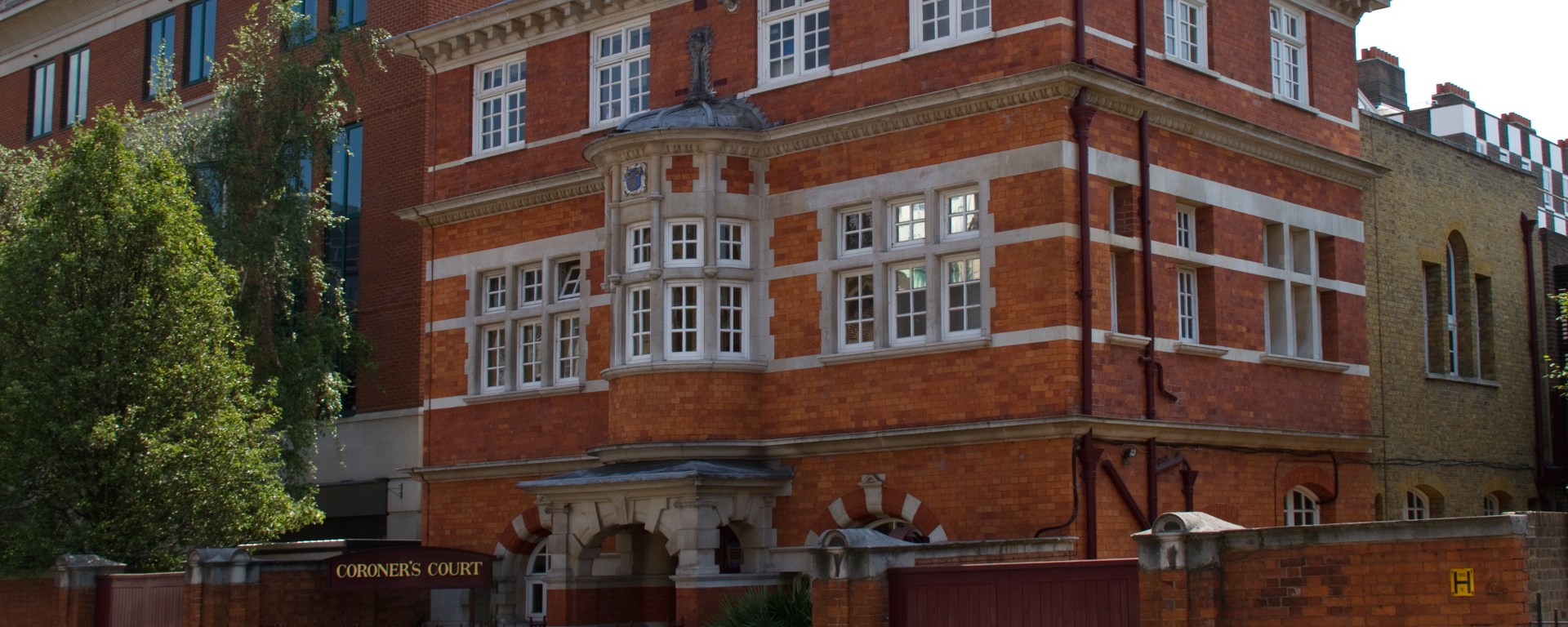
- When Southwark Coroner’s Court in London inadvertently failed to notify the media of the opening of an inquest into the perpetrators of the terrorist attack on London Bridge and Borough Market in 2017, accredited journalists were permitted to take notes from a recording of the hearing. (See: Section 26 of Coroners (Inquests) Rules ‘Recording inquest hearings’- https://www.legislation.gov.uk/uksi/2013/1616/article/26/made and ‘Chief Coroner’s Guidance No. 4 Recordings’- https://www.judiciary.uk/guidance-and-resources/chief-coroners-guidance-no-4-recordings/);
- The Coroners (Inquests) Rules 2013 (https://www.legislation.gov.uk/uksi/2013/1616/contents/made) provide detailed guidance on procedure. There are three types of hearing: a pre-inquest review hearing; an inquest opening; and the full hearing that may also be described as the final hearing. Inquests can be adjourned;
- Rule 9 of the 2013 Coroners (Inquests) Rules stipulates that the date, time, and location of an inquest hearing must be publicly available. (See ‘Notification of inquest hearing arrangements’- https://www.legislation.gov.uk/uksi/2013/1616/article/9/made);
- The Chief Coroner has issued a guidance briefing stating that a coroner must in advance of a ‘final’ inquest hearing, and where possible seven days before it, publish (preferably online) certain details including the date, time and place of the inquest, name and age of the deceased, and date and place of their death. (See https://www.judiciary.uk/guidance-and-resources/chief-coroners-guidance-no-25-coroners-and-the-media/) ;
- Where possible such advance notice should be given for pre-inquest review and ‘opening’ hearings, and that it is ‘good practice’ to use email to update the media about forthcoming cases;
- In June 2022 the Chief Coroner issued new guidance (Number 42) on remote hearings for Coroners and their inquests. This recognized that Section 85A of the Courts Act 2003 and the Remote Observation and Recording (Courts and Tribunals) Regulations 2022 meant Coroners can allow remote online audio-visual observation by the public, including the media and remote attendance by participants such as interested person, witnesses and legal representatives. (See ‘Remote Hearings’- https://www.judiciary.uk/guidance-and-resources/chief-coroners-guidance-no-42-remote-hearings/);
- Section 41 of the Judicial Review and Courts Act 2022 allows virtual hearings in coroners’ courts (“Virtual hearings”) in terms of use of audio or video links at inquests. (See: https://www.legislation.gov.uk/ukpga/2022/35/section/41);
- The Chief Coroner has always held to the view that Coroners and their juries should be present in the physical inquest courtroom and it is expected that any remote attendance by them in the future would only be permitted in exceptional circumstances;
- Inquests are rarely combined with public inquiries, or may be replaced by a statutory public inquiry. These situations arrive with controversial deaths raising issues of great social and political significance and where national security dimensions make it difficult for an inquest to fulfil its function. Examples have included the inquiry and inquest into the death of Dr David Kelly by Lord Hutton in 2003 which reported in January 2004, but this was not a statutory inquiry under the Inquiries Act which was passed in 2005. (Hutton Inquiry report https://irp.fas.org/world/uk/huttonreport.pdf);
- In 2009 a government minister explained that an inquiry under the 2005 Inquiries Act would be held instead of an inquest when there was ‘the existence of highly sensitive matters-including, for example, intercept material- which are directly relevant to the purposes of the inquest, and which may not be disclosed either to a coroner or a coroner’s jury, and where there is no alterative way of ensuring the matters are protected from public disclosure;’
- Examples include the inquiry in 2014 into the circumstances surrounding the death of Alexander Litvinenko, the former Russian spy, who was poisoned with radioactive tea and which reported in 2016, and the inquiry into the death Azelle Rodney shot dead by a Metropolitan Police specialist firearms officer in 2005 which reported in July 2013 (‘The Litvinenko Inquiry- Report into the death of Alexander Litvinenko’ https://assets.publishing.service.gov.uk/government/uploads/system/uploads/attachment_data/file/493860/The-Litvinenko-Inquiry-H-C-695-web.pdf and ‘The Report of The Azelle Rodney Inquiry’- https://assets.publishing.service.gov.uk/government/uploads/system/uploads/attachment_data/file/246478/0552.pdf);
- Inquests into the deaths of people involved in any event subject to a statutory public inquiry will be adjourned until the reporting of the public inquiry. (See House of Commons research paper ‘Inquests and public inquiries’, 2017- https://commonslibrary.parliament.uk/research-briefings/cbp-8012/) A coroner’s investigation of a death may be resumed after a public inquiry has concluded, but only if the coroner thinks there is sufficient reason for doing so. If the investigation is resumed, an inquest might be held as part of that investigation;
- Section 40 of Judicial Review and Courts Act 2022 gives Coroners the ‘power to conduct non-contentious inquests in writing.’ This legislative move was opposed by professional journalism bodies because it was seen as an extension of ‘office justice’ begun with criminal ‘Single Justice Procedures.’ The press and public are not present, information exchange and the detail of submissions and evidence is not readily available for reporting and public scrutiny. The section does not appear to provide any legislative right for journalists to oppose a Coroner’s decision to hold an inquest in writing only or access to evidence and documentation considered. Direct written application to the Coroner would be advisable. The only method of legally challenging these decisions would appear to be by way of judicial review to the High Court, though such a remedy has major cost-bearing implications. (See https://www.legislation.gov.uk/ukpga/2022/35/section/40);
- The Coroner for Mid Kent and Medway Catherine Wood issued an ‘unprecedented’ reporting ban in March 2023 on identifying the name of a surgeon who is a key witness in an inquest into deaths of patients who contracted herpes during operations. Media lawyers and journalism bodies find it difficult to recall a similar instance of such a media prohibition order being made at an inquest hearing. The surgeon concerned may have infected the two new mothers with herpes. The coroner said the decision to ban identification is based on the surgeon’s ‘apprehension’ about being named when he takes the stand as a witness. She said it is ‘likely impede his evidence in court’ and affect his health. See Irish Times & PA Media ‘‘Unprecedented’: Coroner prohibits naming of surgeon in herpes deaths inquest.’ See: https://www.irishnews.com/news/uknews/2023/03/07/news/_unprecedented_coroner_prohibits_naming_of_surgeon_in_herpes_deaths_inquest-3114464/
- There is a real risk this decision could open the floodgates to more restrictions protecting witnesses from identification in inquests. See: https://www.hilldickinson.com/insights/articles/anonymity-inquests-coroner-prohibits-naming-witness-herpes-death-inquests The decision was opposed by the bereaved families of those who died and media organisations. See: https://www.dailymail.co.uk/news/article-11808419/Agony-extended-family-mother-died-herpes-caught-surgeon-did-caesarean.htm The Mid Kent and Medway Coroner is investigating the cases of Kimberly Sampson, 29, and Samantha Mulcahy, 32, who both died in 2018 after the same obstetrician conducted their caesareans. They were treated six weeks apart in hospitals run by East Kent Hospitals University NHS Trust (EKHUT).
- In an age when detectorists and exploring for historical artefacts using metal detectors are so popular, it should be mentioned that Coroners have a longstanding and traditional role in determining the ownership of valuable objects found buried in land in England and wales. It is known as Treasure Trove. (See ‘Treasure- A Practical Guide for Coroners’- https://www.judiciary.uk/wp-content/uploads/2016/07/treasure-a-practical-guide-for-coroners.pdf and Chapter 4 of the Coroners and Justice Act 2009-https://www.legislation.gov.uk/ukpga/2009/25/part/1/chapter/4);
- People who find what would be recognised as treasure need to report it first to a local Finds Liaison Officer in England and in Wales the local Coroner and Portable Antiquities Scheme Cymru Coordinator. If the item may be treasure and a museum wishes to acquire it, the Coroner should open and list an Inquest. The purpose of the inquest is to establish whether the find is treasure, who found it, and when and where it was found.
- In February 2023 the government by statutory instrument changed the definition of ‘treasure’ in the 1996 Treasure Act from items found over 300 years old and made of gold or silver, or found with artefacts made of precious metals to include exceptional finds more than 200 years old, regardless of the type of metal of which they are made (See The Treasure Act 1996 Code of Practice (2nd Revision) https://assets.publishing.service.gov.uk/government/uploads/system/uploads/attachment_data/file/77532/TreasureAct1996CodeofPractice2ndRevision.pdf & The Treasure Act 1996 https://www.legislation.gov.uk/ukpga/1996/24/contents & ‘Government changes the legal definition of treasure so that more new discoveries can go on public display’ https://www.gov.uk/government/news/thousands-more-treasures-to-be-saved-for-the-nation-as-rules-about-discoveries-are-changed);
- Coroners are advised to be aware of the possible risk of damage to the landowner’s property and other items of archaeological significance that may occur as a result of revealing the exact location of the find in open Court. Consequently, the find locations are usually identified by the name of a Parish.
- Sudden deaths giving rise to public interest concerns in Scotland are investigated by ‘Fatal Accident Inquiries’- there is no system of Coroner’s courts and inquests in the Scottish jurisdiction. The fatal accident inquiry process is legislatively determined by the ‘Inquiries into Fatal Accidents and Sudden Deaths etc. (Scotland) Act 2016.’ (See: https://www.legislation.gov.uk/asp/2016/2/contents);
- The Scottish system does have similarities with the operation of Coroner’s inquests in England, Wales and Northern Ireland. The inquiries are presided over by Sheriffs (judges in the Scottish judicial system) and ‘They are not adversarial hearings and are not designed to be like civil litigation. Nor have they any connection to criminal proceedings.’ They are divided between mandatory and discretionary inquiries. The former have to be held if a person died in Scotland as a result of an accident in Scotland, in the course of the person’s employment or occupation, if a person has died in Scotland and was in legal custody, or was a child required to be kept or detained in secure accommodation, and under section 104 of the Scotland Act 1998, namely deaths of service personnel in the course of military service in Scotland;
- Unlike in the Coroner’s inquest system, Scottish FAIs do not sit with juries. However, a Sheriff does have the statutory discretion under Section 24 to appoint an assessor to provide assistance based on the assessor’s specialist knowledge or expertise. (See: https://www.legislation.gov.uk/asp/2016/2/section/24);
- The Lord Advocate in Scotland (known as Her Majesty’s Advocate and Scotland’s principal legal adviser and chief public prosecutor) can exercise discretion to prevent a mandatory Fatal Accident Inquiry taking place only if satisfied that the circumstances of the death have been sufficiently established in the course of certain other legal proceedings.
- Section 21 of the Act stipulates that Fatal Accident Inquiries should normally be held in public. However, subsection (2) allows the sheriff to order that an inquiry, or part of it, is to be held in private. The sheriff can make this order if the procurator fiscal or one of the participants applies for it, or may do so on his or her own initiative. The circumstances in which an FAI may be held in private have been left to the discretion of the sheriff, as the reasons may range widely from issues of national security to the need to protect children or other vulnerable persons. (See: https://www.legislation.gov.uk/asp/2016/2/section/21);
- Section 22 allows the sheriff to prohibit publication of material that could identify a child involved in an fatal accident inquiry. (See: https://www.legislation.gov.uk/asp/2016/2/section/22).
- One aspect of the Scottish system which is to be admired from an Open Justice point of view and facilitating journalistic coverage is that all determinations made in terms of the inquiries into Fatal Accident and Sudden Deaths Act 2016 from 15 June 2017, are published online by the Scottish Judiciary. (See: https://www.scotcourts.gov.uk/search-judgments/fatal-accident-inquiries).
Links
House of Commons Research paper 22nd January 2009 ‘Coroners and Justice Bill: coroners and death certification.’
https://researchbriefings.files.parliament.uk/documents/RP09-07/RP09-07.pdf
Samaritans’ media guidelines for reporting suicide and online resources reinforce industry codes of practice, supporting the highest standards of coverage of suicide.
https://www.samaritans.org/about-samaritans/media-guidelines/
A Guide to Coroner Services for Bereaved People, Ministry of Justice 2020
Inquest- ‘The only charity providing expertise on state related deaths and their investigation to bereaved people, lawyers, advice and support agencies, the media and parliamentarians.’
The Coroners’ Society of England and Wales which seeks:
- the promotion of the usefulness of the office of coroner to the public;
- the ascertainment in questions of difficulty of the duties which devolve on coroners;
- the advancement of such amendments to the law as seem desirable;
- the establishment and maintenance of contact with HM Government and the Chief Coroner; and
- the protection of the rights and interest of coroners
https://www.coronersociety.org.uk/
The history of the role of Coroner stretches as far back as 1194
https://www.coronersociety.org.uk/the-coroners-society/history/
Under the Coroners and Justice Act 2009
https://www.legislation.gov.uk/ukpga/2009/25/contents
Coroners (Inquests) Rules 2013
https://www.legislation.gov.uk/uksi/2013/1616/contents/made
‘Chief Coroner’s Guidance, Advice and Law Sheets’
Chief Coroner for England and Wales is His Honour Judge Thomas Teague KC
https://www.judiciary.uk/courts-and-tribunals/coroners-courts/office-chief-coroner/
Absolute privilege in libel see Section 14 of the Defamation Act 1996
https://www.legislation.gov.uk/ukpga/1996/31/section/14
Contempt of Court Act 1981
https://www.legislation.gov.uk/ukpga/1981/49
IPSO guide to editors and journalists ‘Guidance on reporting deaths and inquests
https://www.ipso.co.uk/media/1490/deaths-journo_v3.pdf
Chief Coroner’s Guidance No.5 Reports to Prevent Future Deaths
UK judiciary portal for Reports to Prevent Future Deaths
https://www.judiciary.uk/?s=&pfd_report_type=&post_type=pfd&order=relevance
The Coroner and the Media- Guidance no 25
https://www.judiciary.uk/wp-content/uploads/2016/10/guidance-no-25-coroners-and-the-media.pdf
The Coroner and Remote Hearings Guidance no 42
https://www.judiciary.uk/guidance-and-resources/chief-coroners-guidance-no-42-remote-hearings/
Hutton Inquiry report into the death of Dr David Kelly, January 2004
https://irp.fas.org/world/uk/huttonreport.pdf
House of Commons research paper ‘Inquests and public inquiries’, 2017
https://commonslibrary.parliament.uk/research-briefings/cbp-8012
Public Inquiry taking over function of an inquest: The Litvinenko Inquiry- Report into the death of Alexander Litvinenko
Public Inquiry taking over function of an inquest: The Report of The Azelle Rodney Inquiry
Treasure- A Practical Guide for Coroners
https://www.judiciary.uk/wp-content/uploads/2016/07/treasure-a-practical-guide-for-coroners.pdf
Chapter 4 of the Coroners and Justice Act 2009
https://www.legislation.gov.uk/ukpga/2009/25/part/1/chapter/4)
Plymouth Live- Plymouth treasure trove inquests as it happens. Join us as we look at lost artifacts found around the region:
https://www.plymouthherald.co.uk/news/plymouth-news/live-plymouth-treasure-trove-inquests-7954962
Medical Defence Union webinar for medical doctors ‘Understanding Coroners’ investigations.’
IPSO ruling on complaint over newspaper’s reporting of an inquest hearing. 09224-19 Laws v Daily Star
Decision: No breach – after investigation.
https://www.ipso.co.uk/rulings-and-resolution-statements/ruling/?id=09224-19
Section 40 of the Judicial Review and Courts Act 2022- Power to conduct non-contentious inquests in writing
https://www.legislation.gov.uk/ukpga/2022/35/section/40
Section 41 of the Judicial Review and Courts Act 2022- Use of audio or video links at inquests
https://www.legislation.gov.uk/ukpga/2022/35/section/41
Prohibition anonymity order in March 2023 for surgeon at Kent Inquest investigating deaths of two mothers after caeserian operations. Irish Times & PA Media ‘‘Unprecedented’: Coroner prohibits naming of surgeon in herpes deaths inquest’
There is a real risk this decision could open the floodgates to more restrictions protecting witnesses from identification in inquests.
The decision was opposed by the bereaved families of those who died and media organisations.
The Treasure Act 1996 Code of Practice (2nd Revision)
The Treasure Act 1996
https://www.legislation.gov.uk/ukpga/1996/24/contents
‘Government changes the legal definition of treasure so that more new discoveries can go on public display’ 18 February 2023
Inquiries into Fatal Accidents and Sudden Deaths etc. (Scotland) Act 2016
https://www.legislation.gov.uk/asp/2016/2/contents and explanatory notes- https://www.legislation.gov.uk/asp/2016/2/notes/contents
Section 21 Fatal Accident Inquiries to be conducted in public
https://www.legislation.gov.uk/asp/2016/2/section/21
Fatal Accident Inquiries- Section 22- Publishing restrictions in relation to children
https://www.legislation.gov.uk/asp/2016/2/section/22
Section 24- Power to appoint an assessor.
https://www.legislation.gov.uk/asp/2016/2/section/24
All determinations made in terms of the inquiries into Fatal Accident and Sudden Deaths Act 2016 from 15 June 2017, are published (under the previous legislation only selected determinations were published).
https://www.scotcourts.gov.uk/search-judgments/fatal-accident-inquiries
Secondary Media Law Codes and Guidelines
IPSO Editors’ Code of Practice in one page pdf document format https://www.ipso.co.uk/media/2032/ecop-2021-ipso-version-pdf.pdf
The Editors’ Codebook 144 pages pdf booklet 2023 edition https://www.editorscode.org.uk/downloads/codebook/codebook-2023.pdf
IMPRESS Standards Guidance and Code 72 page 2023 edition https://www.impress.press/wp-content/uploads/2023/02/Impress-Standards-Code.pdf
Ofcom Broadcasting Code Applicable from 1st January 2021 https://www.ofcom.org.uk/tv-radio-and-on-demand/broadcast-codes/broadcast-code Guidance briefings at https://www.ofcom.org.uk/tv-radio-and-on-demand/information-for-industry/guidance/programme-guidance
BBC Editorial Guidelines 2019 edition 220 page pdf http://downloads.bbc.co.uk/guidelines/editorialguidelines/pdfs/bbc-editorial-guidelines-whole-document.pdf Online https://www.bbc.com/editorialguidelines/guidelines
Office of Information Commissioner (ICO) Data Protection and Journalism Code of Practice 2023 41 page pdf https://ico.org.uk/media/for-organisations/documents/4025760/data-protection-and-journalism-code-202307.pdf and the accompanying reference notes or guidance 47 page pdf https://ico.org.uk/media/for-organisations/documents/4025761/data-protection-and-journalism-code-reference-notes-202307.pdf
 UK Media Law Pocketbook Second Edition